
A brown ring spreading across the ceiling. A soft bulge in the drywall. Water actually dripping down. They all mean the same thing: water is collecting above your ceiling and needs attention today.
The water is coming from somewhere, a burst or leaking pipe, a roof problem, an overflowing bathroom above, or an air conditioning line, and it has already soaked the materials you cannot see. A wet ceiling can sag and even collapse, and trapped moisture starts growing mold within 24 to 48 hours.
The first moves are simple. If you can find and stop the water source, do it. Move anything valuable out from under the area. Then get the leak found and the structure dried before the ceiling fails.
It is tempting to paint over a small stain and move on. The problem is that a ceiling stain is the symptom, not the cause. The water that made it is still finding its way in, and the drywall, insulation, and framing above hold moisture right now.
This post explains what a ceiling leak is telling you, what to do in the first hour, the common causes, what a professional response looks like, and when to call rather than handle it yourself.
What a Ceiling Leak Is Actually Telling You
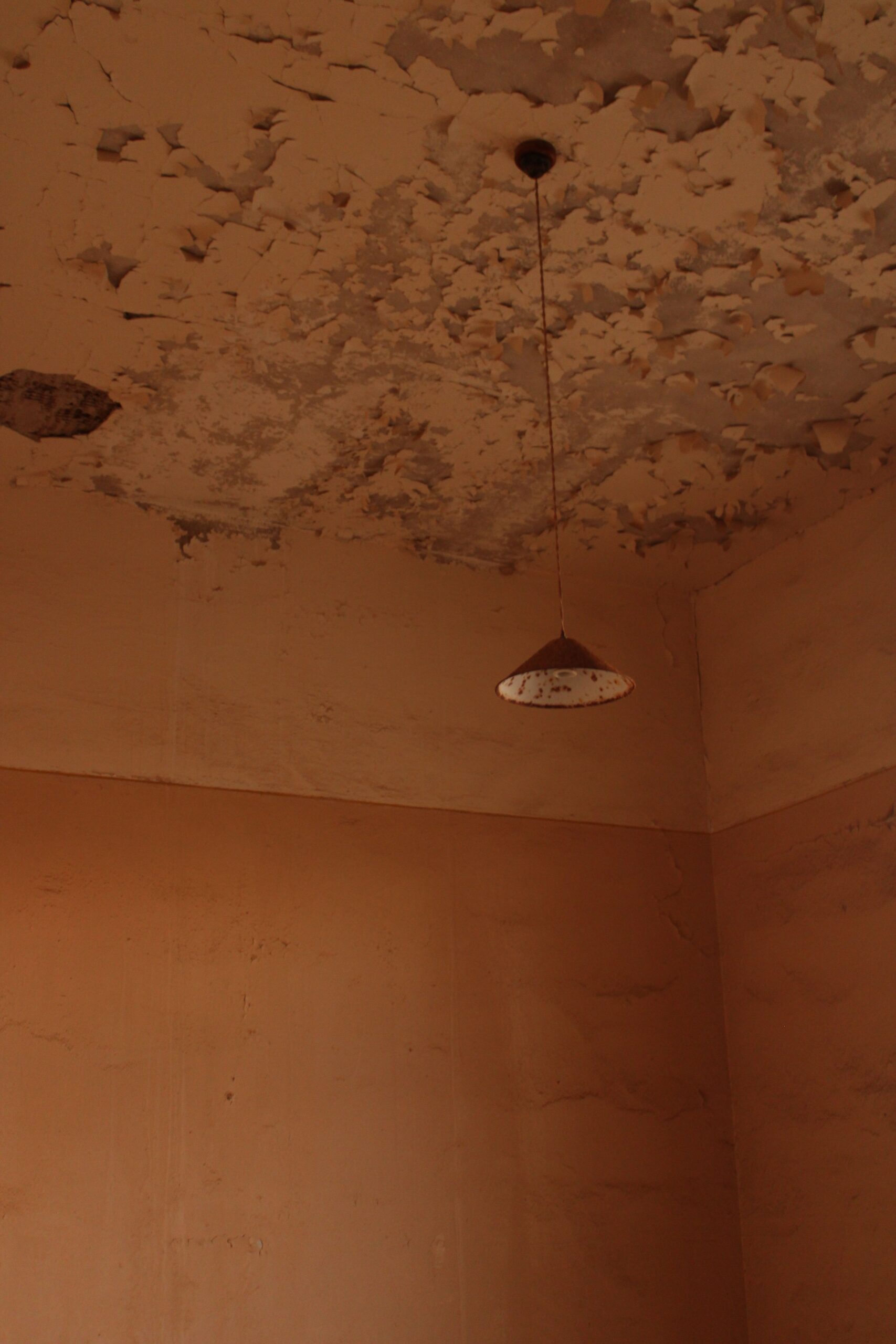
A ceiling stain or drip is evidence that water has been pooling above the drywall, often longer than you realize. Drywall absorbs and holds water, so by the time it shows on the surface, the material is saturated and the insulation above is likely wet too.
A discolored ring points to repeated or ongoing moisture. A sagging or bulging area means water is actively pooling and the drywall is losing its strength. That is a collapse risk, so do not stand under it.
The location is a clue, not an answer. Water travels along framing, pipes, and the top of the ceiling before it finds a low spot to come through, so the stain often sits away from the source. That is why chasing the leak by eye usually fails, and why finding the true source is the first real step in fixing it.
Is It Urgent? What to Do in the First Hour
Yes, treat it as urgent. Start with safety. If the ceiling is sagging or bulging, stay out from under it, because a saturated section can give way without warning. If light fixtures or electrical sit in the area, cut power to that part of the home at the breaker.
Next, stop the water if you can. If you suspect a plumbing source, shut off the water at the main valve. If a bathroom above is the culprit, stop using it.
Then limit the damage. Move furniture, electronics, and valuables out from under the area, and put down a bucket and towels to catch active drips. Some homeowners carefully relieve pressure on a heavy bulge by making a small hole at the lowest point to drain trapped water into a bucket, but only do this if you can do it safely.
Finally, take photos and video for your insurance claim, and call for help to find the source and dry the structure.
Common Causes of a Ceiling Leak
There are a handful of usual suspects.
A plumbing leak or burst pipe in the ceiling or the floor above is common, especially supply and drain lines running between floors. A bathroom above, an overflowing tub, a failed toilet seal, or a leaking shower pan, sends water straight down through the floor. A roof leak shows up after rain and storms, which matters across Florida during the wet season. An air conditioning system can drip too, when the condensate line clogs or the drain pan overflows, a frequent cause in Florida's climate.
In condos and two story homes, the source is often someone else's unit or the floor above your own, which adds a coordination wrinkle to the repair.
Whatever the cause, a crew has to trace the water to its real origin, stop it, then dry or remove the wet materials. Painting over the stain without that just hides a problem that keeps growing.
What a Professional Water Damage Response Looks Like
A proper response starts by finding the source. The crew uses moisture meters and often thermal imaging to trace where the water is coming from and how far it has spread above and around the ceiling.
From there, the crew extracts any standing water and removes ceiling materials and insulation too saturated to save. Then air movers and dehumidifiers dry the structure, and the crew checks moisture daily until it hits a safe target. It is the same emergency response any water loss needs in the first 24 hours.
The crew documents everything for your insurance claim and handles any mold through proper mold remediation services rather than sealing it behind new paint. Once the area is dry, the crew rebuilds the ceiling and any related damage.
On jobs that involve several trades, plumbing, drywall, finishing, the value of a single point of contact who coordinates it all becomes obvious. This is the core of professional water mitigation services.
What This Looks Like for a Real Homeowner
A recent Entrusted customer described the process in a Google review:
"We used Entrusted on a complicated Master Bathroom Repair, which involved a leak that compromised the roof of the patio ceiling below... Parker coordinated the Plumber, the Tile contractor, the Woodworker, as well as all the necessary Inspections to seamlessly finish this project. He was in constant contact with me, making sure his workers arrived when expected and they were respectful of my home."
-- Robin C., Google review

When to Call vs Handle It Yourself
A tiny, one time stain from a known and fixed cause, say a tub that overflowed once and dried, may only need monitoring and a coat of stain blocking primer.
But call a professional when the stain spreads or returns, when the ceiling sags, when you cannot find the source, when the water may come from a roof or a unit above, or when it has been wet for more than a day. Those situations mean hidden moisture is present, and hidden moisture is what turns a cosmetic stain into a structural and mold problem.
When in doubt, a moisture inspection costs far less than a torn out ceiling and a mold remediation later.
Frequently Asked Questions
What to Do If Water Is Coming Through Your Ceiling
do not wait to see if it dries on its own. The faster someone finds the source and dries the structure, the less likely you are to lose the ceiling or face mold.
Entrusted has handled emergency water removal for over 20 years. We extract the water fast, dry the structure to the readings, and explain what we find in plain terms. We also work directly with insurance companies, so you are not navigating that process alone.
Call Entrusted 24/7 at 561-966-0765 or request help online.